

🚨 Alert #4851 Wed Sep-16 19:20:37
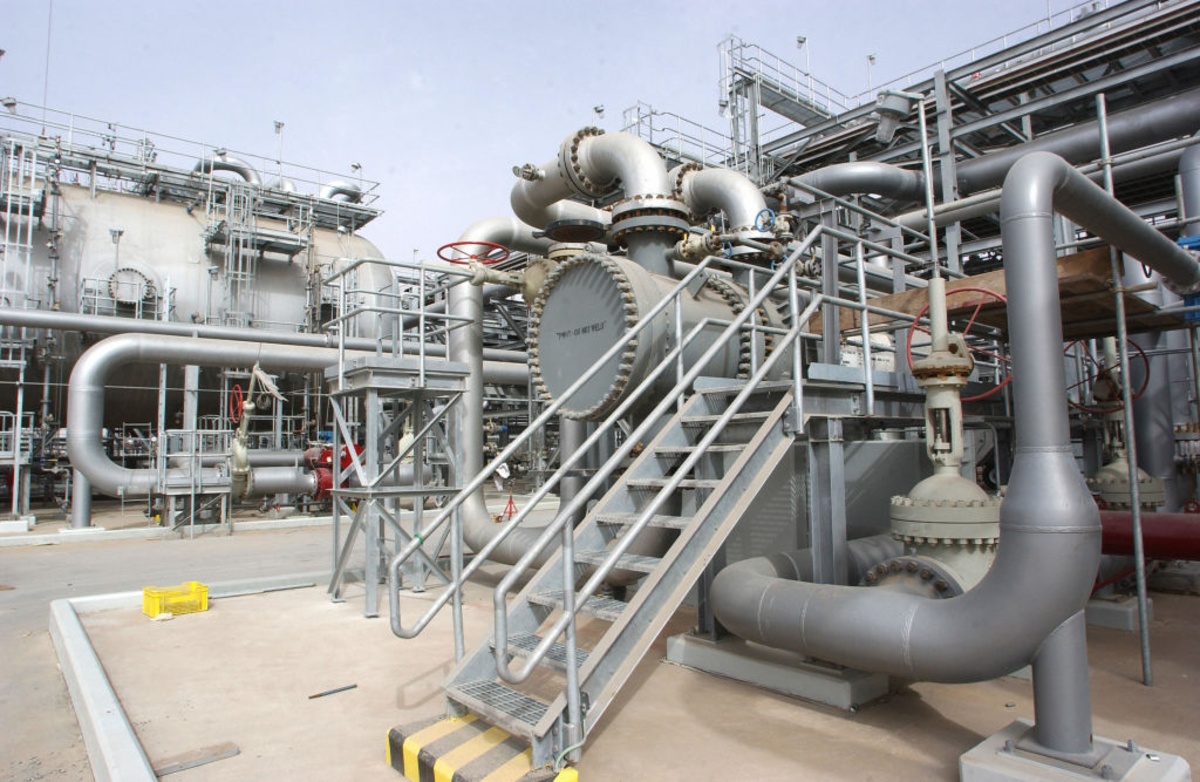
Drone attacks on Saudi Arabia's East-West Pipeline have pushed 10-year Treasury yields above 5%, increasing borrowing costs for tech companies heavily leveraged for AI infrastructure.
🎯 Tickers & verdicts
| ticker | direction | verdict | since close | 30m | day lo | day hi | intraday px |
|---|---|---|---|---|---|---|---|
| primary AAPL | ▼ bearish | FRESH | +0.84% | +0.33% | 330.83 | 334.62 | |
| AMD | ▼ bearish | PRICED | +3.21% | -0.08% | 507.23 | 526.80 | |
| SMCI | ▼ bearish | PRICED | +3.09% | +0.61% | 35.39 | 37.10 | |
| NVDA | ▼ bearish | REPRICING | +1.64% | +0.34% | 212.95 | 216.67 | |
| META | ▼ bearish | REPRICING | +1.29% | +0.61% | 668.16 | 682.73 | |
| TSLA | ▼ bearish | REPRICING | +1.05% | -0.06% | 355.70 | 364.61 | |
| TSM | ▼ bearish | FRESH | +1.00% | +0.13% | 414.41 | 421.11 | |
| MSFT | ▼ bearish | FRESH | -0.70% | +0.06% | 488.42 | 502.77 | |
| ASML | ▼ bearish | FRESH | +0.52% | -0.07% | 1586.40 | 1639.00 | |
| QCOM | ▼ bearish | FRESH | -0.38% | -0.03% | 183.82 | 190.90 | |
| GOOGL | ▼ bearish | FRESH | +0.36% | +0.42% | 324.65 | 347.09 | |
| AMZN | ▼ bearish | FRESH | -0.35% | +0.01% | 244.80 | 249.46 | |
| peer AVGO | ▼ bearish | FRESH | +0.21% | -0.20% | 336.29 | 343.77 | |
| PLTR | ▼ bearish | FRESH | +0.14% | +0.09% | 169.68 | 175.29 | |
| MU | ▼ bearish | FRESH | +0.06% | -0.45% | 920.24 | 940.16 |
🧭 Decisions
| strategy | ticker | action | side | rationale |
|---|---|---|---|---|
| S1 | AAPL | ● enter | ▼ short | verdict FRESH, direction bearish -> short AAPL (other: Drone attacks on Saudi Arabia's East-West Pipeline have pushed 10-year Treasury yields above 5%, increasing borrowing costs for tech companies heavily leveraged for AI infrastructure.) |
| S2 | - | ○ skip | — | no counterparty in universe |
| S3 | AVGO | ● enter | ▼ short | verdict FRESH, direction bearish -> short AVGO (other: Drone attacks on Saudi Arabia's East-West Pipeline have pushed 10-year Treasury yields above 5%, increasing borrowing costs for tech companies heavily leveraged for AI infrastructure.) |
| S4 | AAPL | ● enter | ▼ short | overnight drift: short AAPL at close, exit next close (other: Drone attacks on Saudi Arabia's East-West Pipeline have pushed 10-year Treasury yields above 5%, increasing borrowing costs for tech companies heavily leveraged for AI infrastructure.) |
📈 Trades
| strategy | ticker | side | qty | entry | exit | P&L $ | status |
|---|---|---|---|---|---|---|---|
| S1 | AAPL | ▼ short | 2 | 334.20 | 332.29 | +3.82 | closed |
| S3 | AVGO | ▼ short | 2 | 340.11 | 339.10 | +2.02 | closed |
| S4 | AAPL | ▼ short | 3 | 332.45 | 337.27 | -14.46 | closed |
Retrospectives
| ticker | mfe | mae | reflection |
|---|---|---|---|
| AAPL S1 | +1.01% | -0.12% | Signal: right. Price fell ~0.57% from entry, and the modest pre-entry rise (+0.84% since prior close) means the bearish move hadn't already occurred — the short was, if anything, entered at a favorable local high, so timing was fine. Exit: partial capture — the trade banked +0.57% against a best unrealized of +1.01% and near-zero adverse excursion (-0.12%), so roughly half the available move was left behind. Dominant factor is a correct signal with a merely adequate exit; whether the stated macro rationale (yields/pipeline) actually drove the move can't be verified from this data. |
| AVGO S3 | +1.22% | -0.06% | Signal: Right — the bearish call worked; price fell after entry with essentially no adverse move (worst unrealized only -0.06%). Whether the stated macro rationale (yields, pipeline attacks) actually drove it isn't verifiable from this data. Timing: Fine — entry was slightly above prior close (+0.21% context), so the move had not already happened; the trade rode fresh downside. Exit (dominant factor): The exit captured only ~0.30% of a +1.22% best unrealized gain — roughly a quarter of what was available (+$2.02 realized vs. ~$8.30 at the peak). The trade was directionally clean but the exit left most of the move on the table. |
| AAPL S4 | +4.70% | -1.69% | Signal: Directionally the short saw a large favorable move at some point — the position was up as much as +4.70% unrealized — so the predicted downside did materialize intra-trade, even though the close-to-close result was negative. Timing: Entry came after only a modest run-up (+0.84% off prior close), so there's no evidence the anticipated move had already been exhausted before entry; the data doesn't settle timing as a problem. Exit: This is the dominant factor, bluntly: the mechanical next-close exit surrendered a +4.70% unrealized gain and closed near the worst point seen (-1.69% worst vs. the -1.45% realized loss), turning an available winner into a -$14.46 loss. The exit rule, not the thesis, drove the outcome here — noting also that the stated rationale (10-year yields above 5% from pipeline attacks) is journal text whose accuracy can't be verified from the data given. |
📖 Glossary
- S1 primary — trades the alert's primary ticker in the direction the article itself indicates; exits at the same day's close.
- S2 counterparty — trades the inferred counterparty ticker (weakest signal, LLM-inferred sympathy); exits at the same day's close.
- S3 peer — trades an inferred peer ticker (also LLM-inferred sympathy); exits at the same day's close.
- S4 overnight — holds the primary ticker from today's close to the NEXT day's close.
- Verdicts are decided top-to-bottom, first match wins; REPRICING is also the fallback when nothing else matches (2026-08-08 #220).
- UNKNOWN — a needed price input (move since close or move in the last 30m) is missing.
- PRICED — |move since previous close| ≥ 2.0%: already reflected in price.
- REPRICING — |move in the last 30m| ≥ 0.5%: the tape is actively moving on it. Also covers a quieter move — |move since previous close| in [1.0, 2.0) with a quiet last-30m tape: still developing, not yet priced.
- FRESH — |move since previous close| < 1.0%: a genuinely new move.
- materiality — how market-moving the story was judged, 0-100 — alerts require materiality ≥ 70.